Graphical errors to avoid for effective visual identity

Contents
Graphical errors? It's no way! In 2024, we say stop graphic design errors that could easily be avoided.
You wouldn't want your brand to become less memorable, less identifiable, or even more « Has been » ?
It is therefore essential to identify bad uses in graphic design that can weaken your visual identity and reduce the impact of your communications. For example: improper use of typographies, distorted logo, incoherence of colors or pixelized visuals.
Poorly controlled visual communication can send a bad image back to your audience and alter its confidence in the long term. So here are some graphic mistakes to avoid and our advice to strengthen the consistency and credibility of your brand.
1. Lack of readability in graphic design
❌ The first error is to ignore legibility by overloading the graphic design. Too many visual elements can alter the message's understanding.
✅ To avoid this, it is recommended that:
- choose easy-to-read typography
- avoid the combination of too many bright colors
- clearly prioritise information
- focus on a clean design
A clear design allows you to communicate your message effectively.
2. Visual inconsistency between media
❌ Ignoring the visual consistency between the different communication media prevents a brand from being identifiable and recognizable.
An inconsistent graphic identity weakens the perception of your brand.
✅ To strengthen your visual identity, we recommend using constant graphic markers on all your media:
- the same colors
- the same typography
- the same styles of illustrations
- the same graphical elements
This consistency enables a strong and credible brand image to be developed.
3. Forget your target audience
❌ Another common mistake is to design a design based on his personal tastes rather than the expectations of his audience.
Effective design must first and foremost speak to your target.
✅ To avoid this, it is important to:
- analyze your audience preferences
- observe your area's visual codes
- follow relevant graphic trends
Distinguishing is essential, but creating a completely disconnected design from its target can harm your communication.
« The best advertising is a satisfied customer. »
Bill Gates, Microsoft entrepreneur and co-founder
4. Do not adapt visuals to supports
❌ A very common error is not adapting the visuals to the media used or neglecting image resolution.
Poorly dimensioned or pixelized visuals can quickly give an unprofessional image.
✅ It is therefore essential to adapt your creations to the formats and resolutions of different media:
- digital : website, social networks, newsletters
- print : flyers, posters, brochures, kakemonos
Adapting visuals ensures optimal quality on each communication medium.
5. Ignore trends in graphic design
❌ Using an outdated or unsuitable design to meet public expectations can give an outdated image of your brand.
Graphics are constantly evolving and brands must remain attentive to visual trends.
✅ To stay up to date, we advise you to:
- follow design blogs
- consult the portfolios of designers
- observe creative platforms like Behance or Dribble
- analysing trends on social networks
These sources of inspiration help identify new styles and graphic approaches.
Conclusion
Avoiding these graphic errors enhances the impact of your visual communication and the credibility of your brand.
A coherent and thoughtful visual identity is essential to gain the confidence of your audience and differentiate from competition.
Graphics is not simply aesthetic: it is a real strategic lever to enhance your brand on all your communication media.
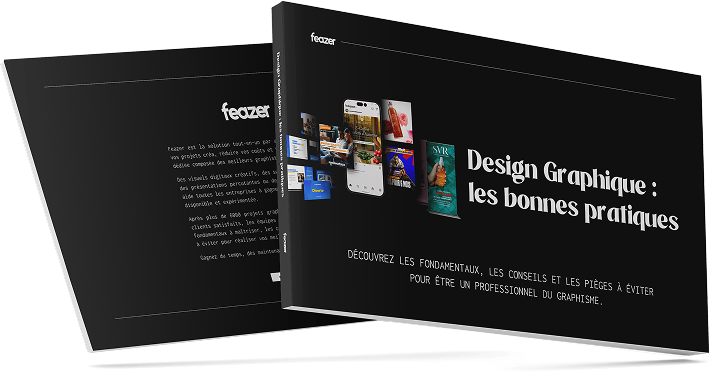
Our exclusive Ebook:Good practices in Graphic Design
Discover the fundamentals, tips and pitfalls to avoid in order to be a graphic professional.