How to use the AI in graphic design: tools and good practices
Contents
Artificial intelligence gradually transforms graphic design. Today, many tools can be used to generate images, edit visuals or automate creative tasks.
But to really exploit the potential of AI in your graphic projects, it is essential to know the tools available and learn how to use them effectively.
Know and master graphic design tools based on AI
Before you start using artificial intelligence for your graphic projects, you must first know the main tools available and their features.
If you want to edit photos, you can use tools such as:
- Adobe Photoshop with its optimized generative d的IA features.
- Luminar AI for automatic retouching and quick visual improvements.
To generate images through artificial intelligence:
- DALL-E, Midday or Artbreeder create unique visuals from text descriptions.
To create graphic elements or preconceived designs:
- Canva with its IA features allowing to get design suggestions and automatic corrections.
- Vectornator with IA support for the creation of vector illustrations.
- DESIGNS to quickly generate logos, banners and models.
- SlidesAI to transform text into visually appealing presentations.
This list of tools is of course not exhaustive and new tools appear regularly.
Once your tools are selected, take the time to explore them and master their features. For example:
- use automatic enhancement functions to adjust colors, brightness and contrast
- test intelligent detouring to easily isolate elements from an image
- explore AI-based filters and effects to create original visual styles
Test and integrate AI in your graphic projects
One of the main advantages of artificial intelligence in graphic design is the automation of repetitive tasks.
For example:
- automatic visual resizing
- Adding logos to multiple formats
- the declination of a visual on different media
Some AI-based collaborative tools also allow you to share your creations and get suggestions for real-time improvement.
To take full advantage of AI in your daily work, it is important to clearly define your goals and identify the steps in your creative process that can be automated.
Keeping a critical mindset in the face of AI proposals
Artificial intelligence is not infallible. The results generated may sometimes be inconsistent or may not exactly match your visual identity.
It is therefore essential to analyze the proposals generated by the AI with your own eyes and experience.
Consider the AI as an assistant or junior member of the team who can help you, but still needs to be guided.
Stay on watch over artificial intelligence tools
The field of AI is evolving extremely rapidly. New tools and features appear regularly.
To maintain performance, we recommend:
- follow trends in graphic design and artificial intelligence
- participate in online training
- watch tutorials to optimize the use of tools
- attend conferences or events dedicated to AI
Respect licensing and copyright
When using artificial intelligence tools to create visuals, you must also be attentive to licenses and copyrights.
Respect the conditions for using the tools and resources used and do not forget to credit artists or developers when necessary.
Measuring the impact of your graphic creations
To know if your visuals are effective, it is important to test different versions and analyze their performance.
For example:
- create two different versions of a visual
- present them to two similar segments of your hearing
- compare the results obtained
Indicators that you can analyze include:
- click rate
- the conversion rate
- the number of shares
- level of commitment
Stay the creative leader
Although AI automates certain tasks, human creativity remains essential in the creation process.
The role of the designer or artistic director is to guide creation, define visual identity and decide creative directions.
Artificial intelligence is a powerful tool, but it does not replace human vision and sensitivity.
« The growing emergence of AI in our world requires a parallel increase in emotional intelligence in our leadership. »
Amit Ray, IA scientist and author of Compassionate Artificial Intelligence
Conclusion
Artificial intelligence opens up new perspectives for graphic design. It saves time, automates tasks and explores new creative approaches.
But to take full advantage of it, it is essential to maintain a critical approach and continue to develop its creative skills.
By combining artificial intelligence and human creativity, it is possible to push the boundaries of graphic design and produce ever more innovative projects.
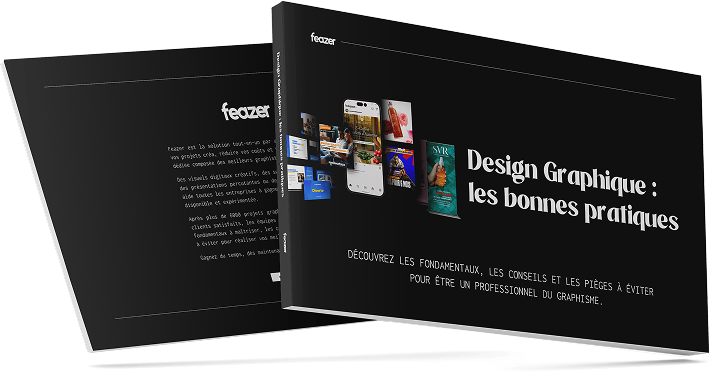
Our exclusive Ebook:Good practices in Graphic Design
Discover the fundamentals, tips and pitfalls to avoid in order to be a graphic professional.